
Children and Plants: Little Lessons from Nature for Growing Up as a Family
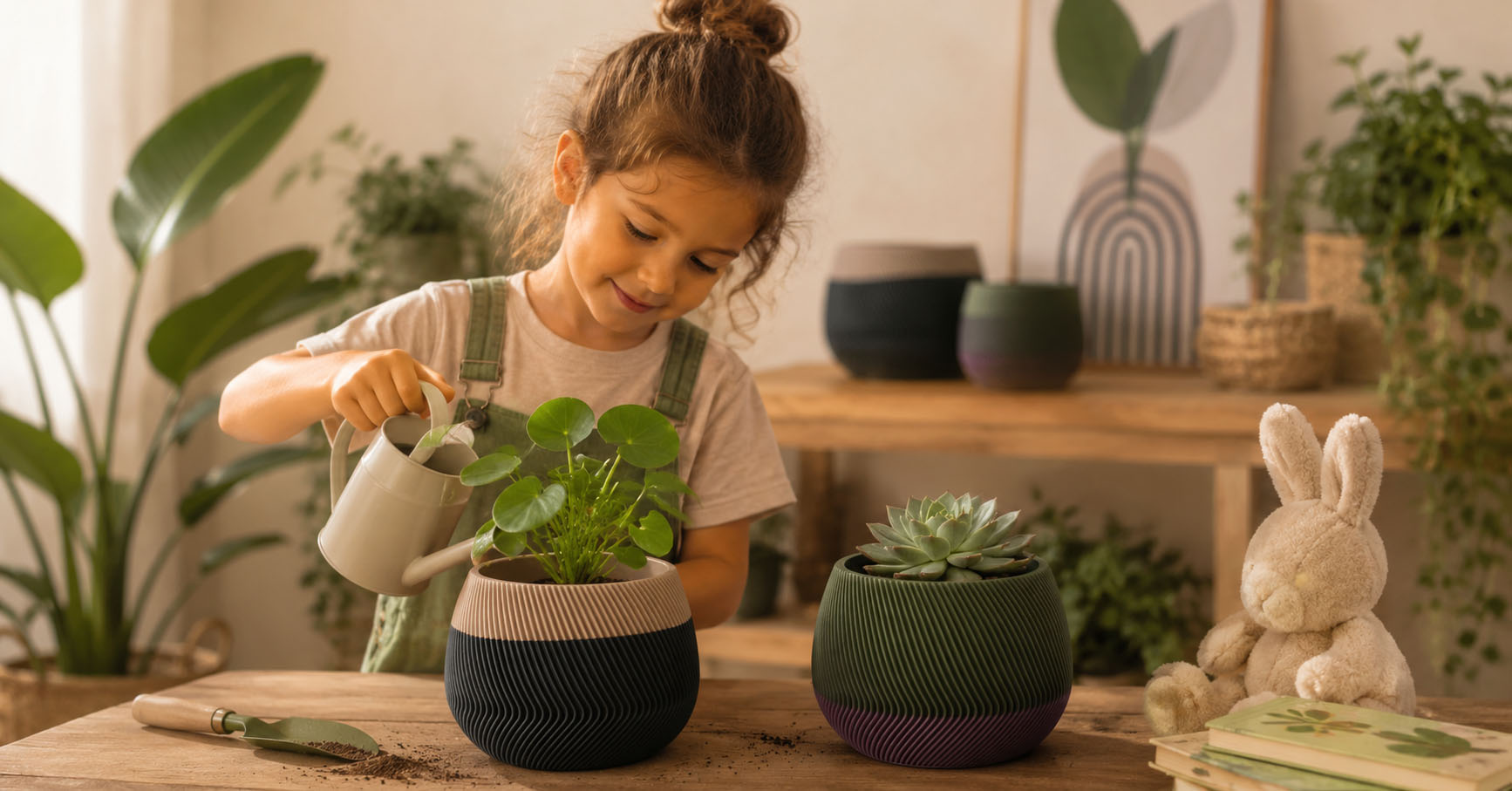
Children's Day is an excellent time to slow down and appreciate the simple experiences that create lasting memories. Among toys, activities, and family time, there's something surprisingly simple that can teach children a lot: taking care of a plant.
You don't need a garden or gardening knowledge. A small pot on a windowsill can become an opportunity to learn, explore, and create positive habits.
Why do plants spark so much interest in children?
Children are naturally curious. They enjoy observing changes, asking questions, and discovering how things work.
When they observe the growth of a plant, they learn something that isn't always easy these days: that some things take time.
Seeing a new leaf emerge, noticing a flower opening, or realizing that a plant needs water helps them understand the cycles of nature in a practical and fun way.
A simple task that teaches responsibility.
Giving a child the responsibility of caring for a plant is a simple way to develop autonomy.
It doesn't have to be complicated. You can start with small tasks like:
- Check if the soil is dry;
- To help with irrigation;
- Clean the leaves with a damp cloth;
- Choose the best location for the plant to receive light.
They are small gestures, but they help to create a sense of responsibility and care.
The best plants to start with
If there are children in the house, it's best to choose hardy and easy-to-care-for species.
Some good options are:
- Succulents — require little maintenance and have interesting shapes;
- Spider Plant — hardy and easy to care for;
- Pilea Peperomioides — known for its round leaves and gradual growth;
- Maranta — with colorful leaves that spark curiosity.
Before buying any plant, it's worth checking if it's suitable for children and pets.
Simple activities to do as a family.
You don't need to turn your house into a greenhouse to create special moments.
Try some of these ideas:
Create a plant diary.
Once a week, ask the child to draw the plant or take a picture. After a few months, it will be possible to see all the progress.
- Give the plant a name
It may seem simple, but it works. When a plant is given a name, children create a stronger connection with it and remember to take care of it more easily.
- Create a green corner
Choose a spot in your home together to gather some plants. Besides decorating the space, it creates a small area for daily contact with nature.
Less screens, more discovery.
It's not always easy to find different activities for young children. Floor plans offer a simple, accessible, and educational alternative.
Touching the soil, observing roots, discovering new leaves, or learning why some plants need more water than others are real experiences that stimulate curiosity and creativity.
A simple idea to celebrate Children's Day.
This Children's Day, try giving something different: a plant to take care of together.
More than just an object, it will be an experience that grows over time and can teach important values such as patience, responsibility, and respect for nature.
Because, just like plants, children also flourish when they receive attention, care, and space to grow.