
The Future of Interior Design is Here: How 3D Printing is Transforming Our Homes
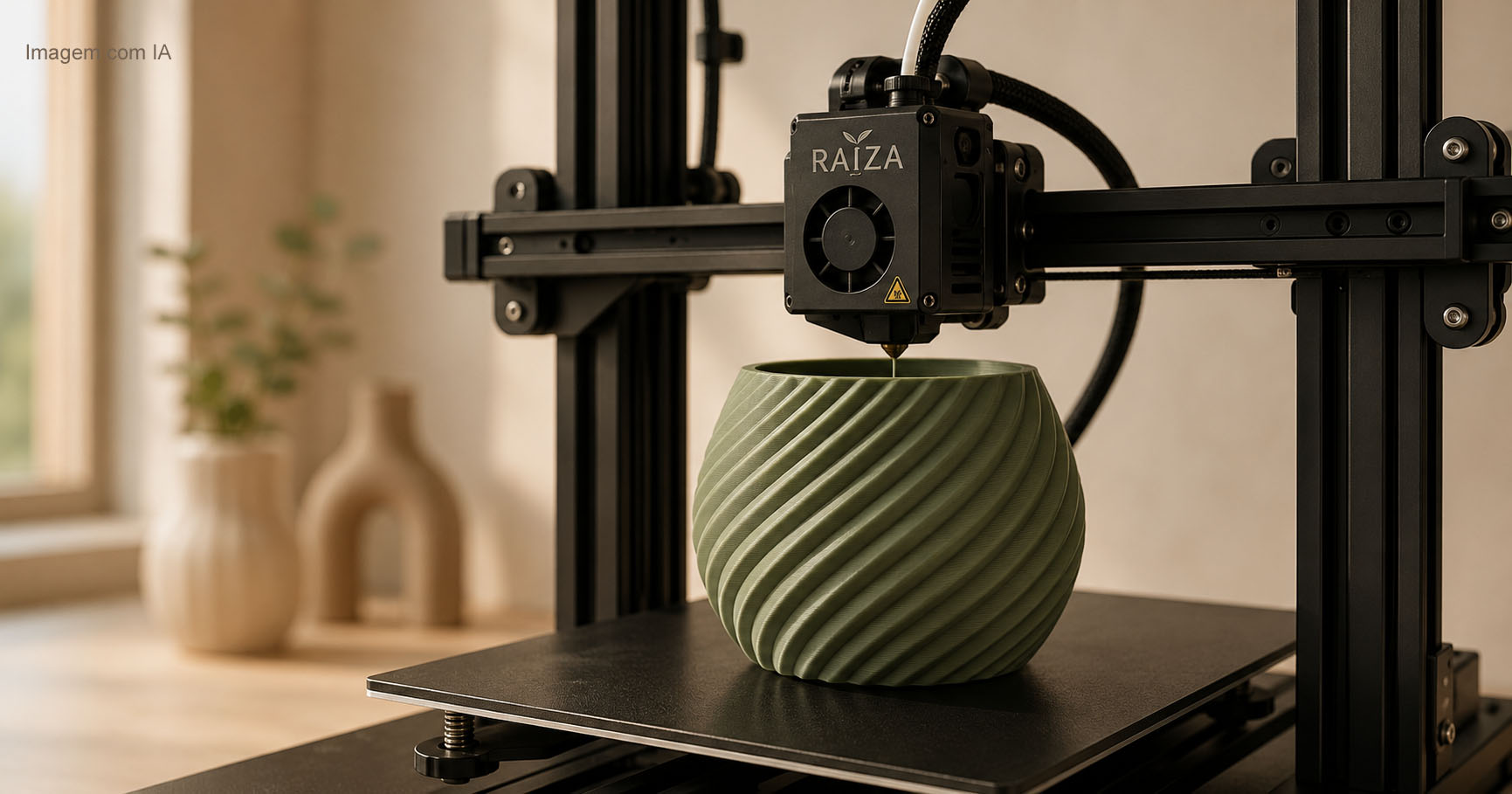
The future of interior design may not emerge from a factory full of assembly lines. It may be born, silently, layer by layer, precisely when someone decides it's time to breathe new life into a space. 3D printing is transforming how we think about interior design, making it possible to create unique, sustainable objects tailored to each person's style.
For many years, interior design followed a mass production model: large quantities, few designs, and often, wasted materials and resources. Today, additive manufacturing technologies allow for a different approach. Instead of producing thousands of pieces and then waiting for them to find a buyer, it's possible to create each object only when there's an order. The result is more efficient use of raw materials, less waste, and more conscious production.
But the real revolution goes far beyond sustainability. 3D printing opens doors to shapes, textures, and patterns that would be difficult, or even impossible, to produce using traditional methods. Organic lines inspired by nature, contemporary geometries, and personalized details make each piece a small expression of creativity.
This evolution also places the consumer at the center of the process. It's no longer just about choosing an object off a shelf, but about finding a piece that matches the home's decor, the personality of its inhabitants, and even the specific dimensions of a given space. Customization has gone from being a luxury to a real possibility.
In the world of indoor plants, this transformation takes on even greater significance. A pot ceases to be merely a container and becomes part of the decor, enhancing the plant's natural beauty and contributing to the creation of more welcoming, harmonious environments full of personality.
As artificial intelligence, digital design, and 3D printing continue to evolve, the possibilities become virtually limitless. The decoration of the future will be more sustainable, more personalized, and much closer to the needs of each individual.
It is precisely in this context that brands emerge that seek to combine technological innovation, contemporary design, and responsible production. At RAIZA, each vase is created through 3D printing, produced after the order is received, and designed to integrate plants and people in the same space, without excess or waste. Because, after all, the decorative object of the future may well be being created, right now, layer by layer.