
Extreme Customization: Create to Order, Just a Click Away
In a scenario where consumers are increasingly attentive to what they buy and why, personalization has ceased to be a detail and has become a selection criterion. It is no longer enough for a product to function or be aesthetically pleasing. It is expected that it adapts, represents, and has intention.
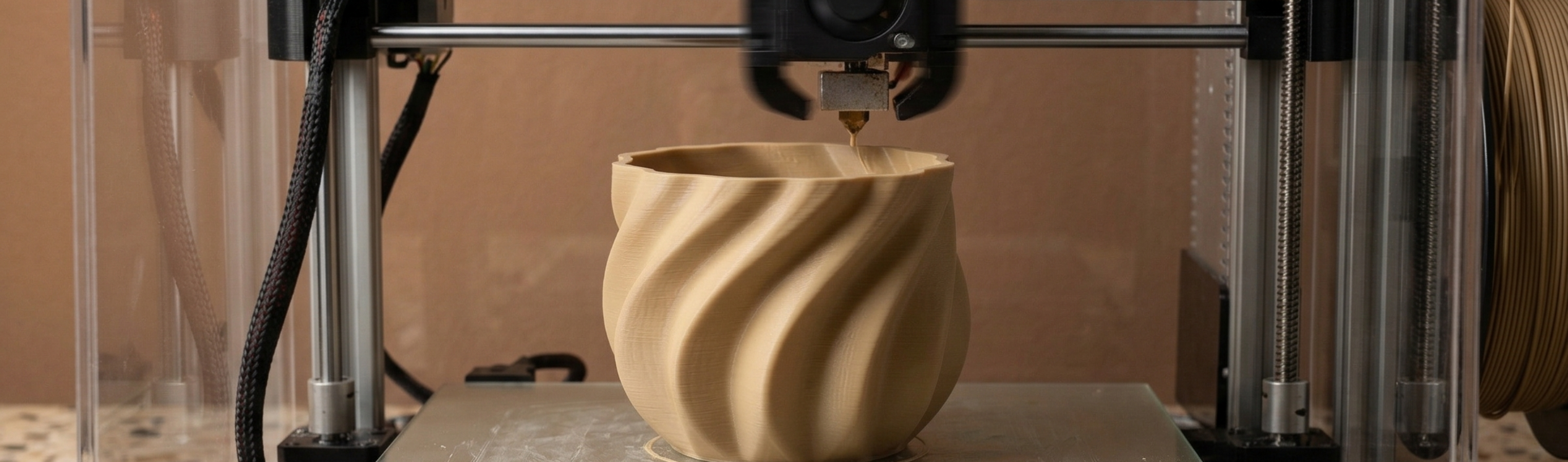
This is where 3D printing becomes relevant . More than a technology, it's a new way of thinking about design and production. Instead of developing one-size-fits-all solutions, it allows for the creation of parts tailored to each need, with a level of flexibility difficult to achieve through traditional methods.
One of the main advantages lies in its adaptability. Dimensions, shapes, colors, and details can be precisely adjusted, allowing each object to respond to the context in which it will be used. This eliminates the classic compromise of choosing something "close to ideal," but never quite right.
Along with this, there is significant creative freedom . 3D printing allows for the exploration of complex geometries, distinctive patterns, and lighter structures, without proportionally increasing the cost or difficulty of production. The result is pieces with more identity and fewer formal limitations.
Another relevant aspect is the efficiency and sustainability of the process. Only what is needed is produced, reducing waste and avoiding surpluses . This more controlled and conscious model is aligned with a clear change in consumer behavior, which increasingly values the impact of their choices.
For buyers, this evolution translates into a different experience. Instead of selecting from predefined options, there is now the possibility of influencing the final result, whether through small choices or completely customized orders.
Naturally, not everything needs to be customized. There are contexts where standardization still makes sense. But when the goal is to create something with identity, tailored functionality, and emotional value, customization ceases to be a luxury and becomes a strategic choice.
In a market saturated with similar products, the real difference increasingly lies in what is custom-designed.
And technology is finally making this possibility accessible.